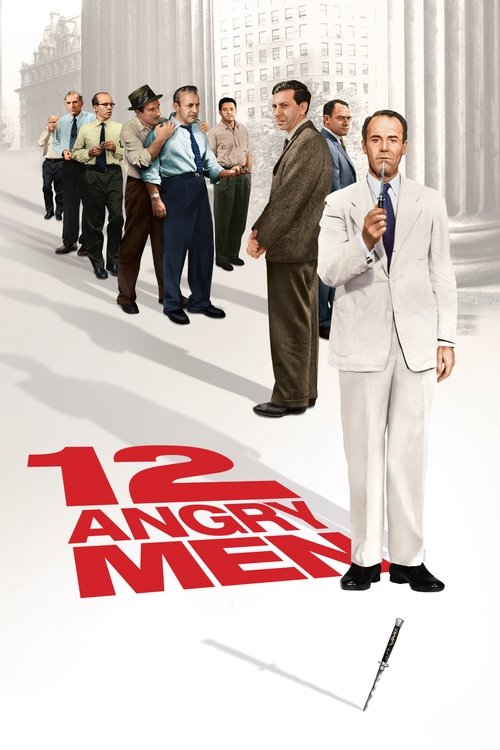
12 Angry Men
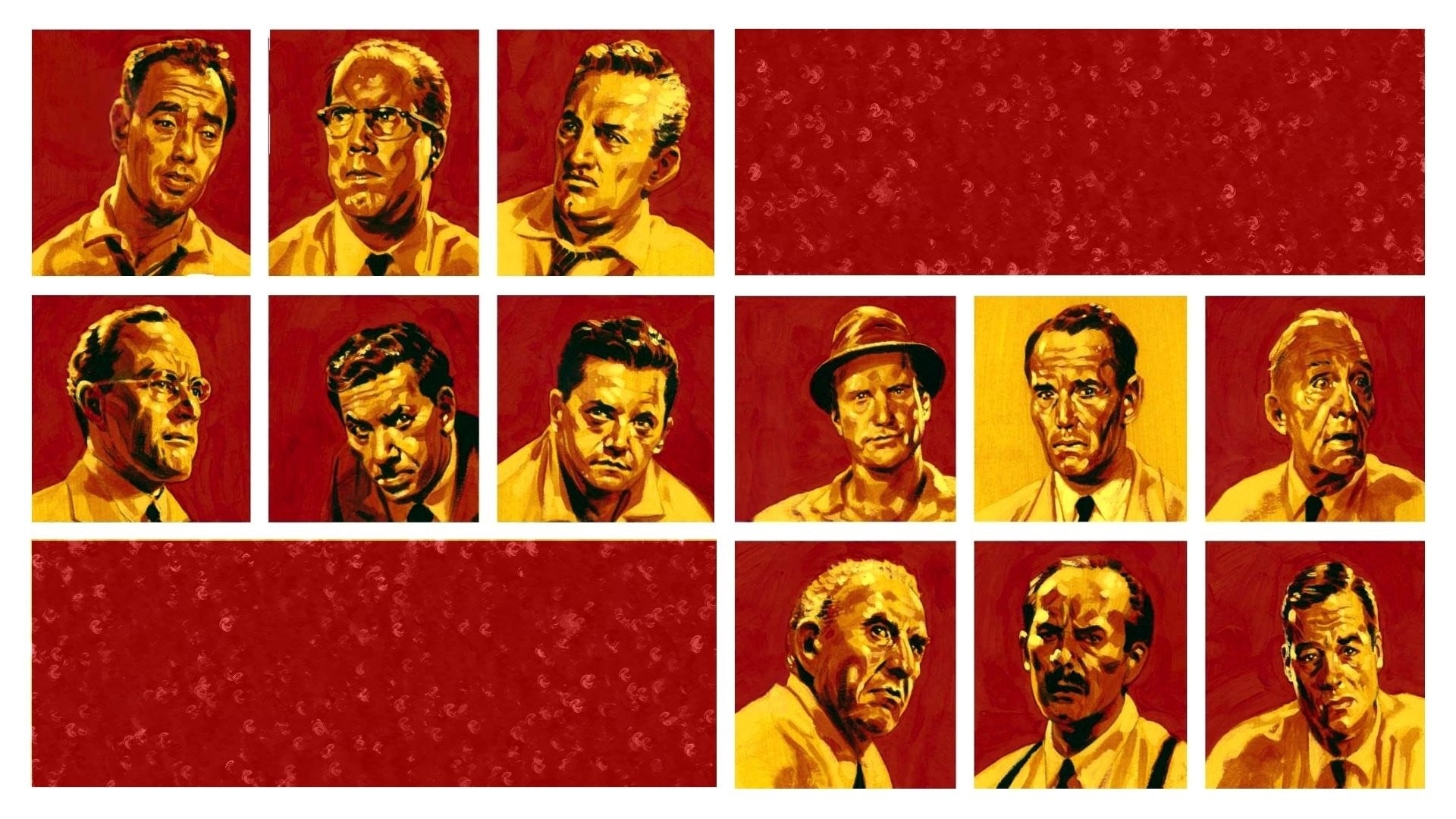
The defense and the prosecution have rested and the jury is filing into the jury room to decide if a young Spanish-American is guilty or innocent of murdering his father. What begins as an open and shut case soon becomes a mini-drama of each of the jurors’ prejudices and preconceptions about the trial, the accused, and each other.

Where to watch


ORAMACAST.COM Review
Sidney Lumet’s 1957 masterpiece, *12 Angry Men*, isn't merely a courtroom drama; it's a claustrophobic masterclass in human psychology, a forensic dissection of prejudice, and a stark reminder that justice is rarely as straightforward as a gavel's fall. From its opening shot, Lumet traps us, much like the jurors, within the confines of a sweltering room, transforming a simple deliberation into a crucible of conviction.
The genius of Reginald Rose's screenplay lies in its audacious simplicity. There are no grand locales, no explosive action sequences, just twelve men and a single verdict. Yet, the narrative tension builds with an almost unbearable precision, each line of dialogue a brushstroke revealing the intricate biases and vulnerabilities of these ordinary citizens. The film's strength lies in its refusal to offer easy answers, instead forcing us to confront the uncomfortable truth that our perceptions are often clouded by lived experience, or lack thereof. Henry Fonda's Juror 8 is not a hero in the traditional sense, but a quiet agitator, his unwavering doubt a slow-burning fuse against the edifice of assumed guilt. His performance, understated yet profoundly impactful, anchors the entire ensemble. Lee J. Cobb’s Juror 3, a man consumed by his own paternal resentments, offers a blistering counterpoint, his rage a tangible presence in the room. The interplay between these two forces is nothing short of electrifying.
Lumet’s direction is surgical. The camera, initially positioned to emphasize the vastness of the room, gradually tightens its focus, utilizing increasingly close-up shots as the arguments intensify. This cinematographic choice brilliantly mirrors the escalating pressure and the stripping away of pretense, forcing intimacy with each man's internal struggle. The lack of an external score, save for the opening and closing credits, further amplifies the raw, unadulterated human drama.
However, while the film’s tight focus is largely its strength, it occasionally veers into a slightly didactic tone. The character arcs, though compelling, can sometimes feel a touch too neatly resolved, particularly for some of the more overtly prejudiced jurors. Their eventual shifts, while narratively satisfying, occasionally hint at a slightly idealistic view of human nature’s capacity for change under pressure. This is a minor quibble, however, in a film that otherwise operates with such meticulous craft.
Ultimately, *12 Angry Men* is a timeless work that transcends its period setting. It’s a profound meditation on civic duty, the fragility of truth, and the monumental responsibility of judgment. It’s a film that demands engagement, not just passive viewing, and its power endures, challenging us to look beyond the surface, both in the courtroom and in life.