Producing High-Quality Audio on a Budget: Smart Investments for 2026
Advertisements
Producing high-quality audio on a budget in 2026 is entirely achievable by focusing on strategic investments in key equipment and software that deliver maximum impact without excessive spending.
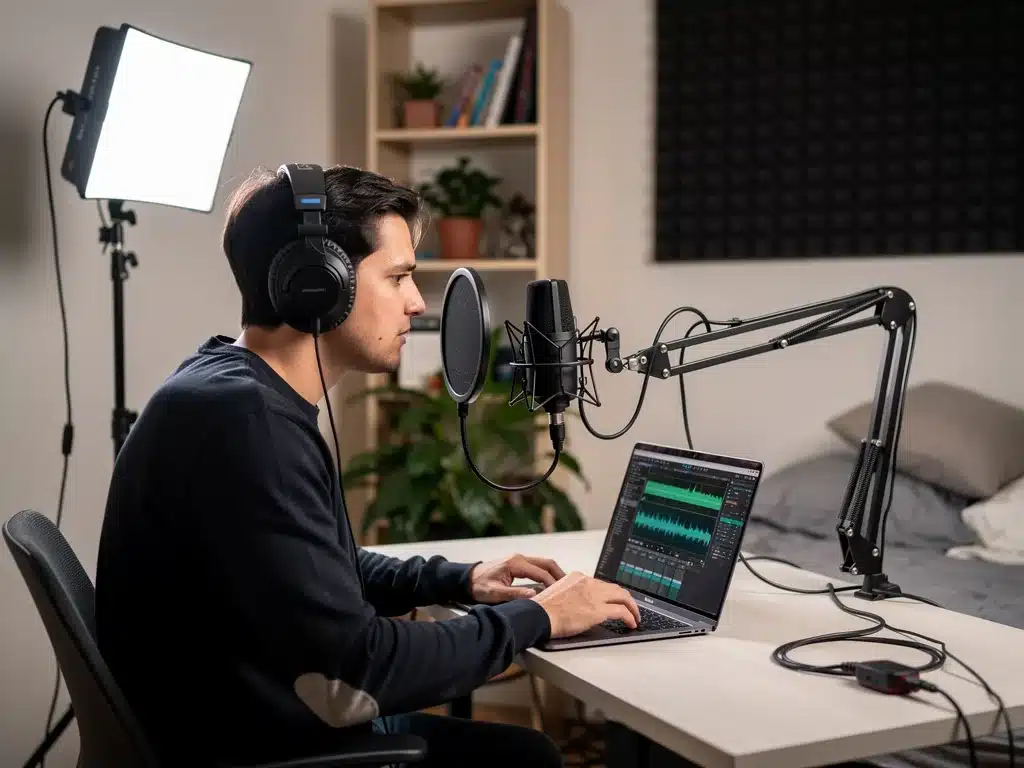
For content creators, podcasters, and musicians alike, the pursuit of exceptional sound often feels like an uphill battle against budgetary constraints. However, mastering Producing High-Quality Audio on a Budget: 6 Smart Investments for 2026 is not only possible but increasingly accessible with today’s technology.
Understanding the Core of Quality Audio Production
Before diving into specific investments, it’s crucial to understand what constitutes high-quality audio. It’s not just about having the most expensive gear; it’s about clarity, consistency, and the absence of unwanted noise. A truly great audio recording captures the intended sound faithfully, without distractions, and presents it in a way that is pleasing and engaging to the listener.
This foundational understanding helps content creators make informed decisions, ensuring every dollar spent contributes directly to improving the final output. Focusing on sound principles like proper microphone technique, acoustic treatment, and efficient post-production workflows can often yield better results than simply buying top-tier equipment without a solid strategy.
Ultimately, high-quality audio enhances listener engagement and professional perception. By prioritizing fundamental audio principles, creators can achieve impressive results even with limited resources, making smart investments that truly matter.
Smart Investment 1: The Right Microphone for Your Needs
Choosing the correct microphone is arguably the most critical decision for any content creator aiming for superior audio quality on a budget. The market is saturated with options, but understanding the nuances between microphone types can save both time and money.
Dynamic microphones are robust and excellent for capturing loud sources or for environments with some background noise, making them ideal for live performances or untreated rooms. Condenser microphones, on the other hand, are highly sensitive, perfect for capturing detailed vocals and instruments in controlled environments like a home studio. USB microphones offer convenience and simplicity, directly connecting to your computer, often with built-in preamps and converters.
Selecting Your Microphone Type
Your primary content type heavily influences the best microphone choice. Podcasters often benefit from dynamic microphones due to their ability to reject ambient noise, while voiceover artists or musicians might prefer the detailed capture of a condenser microphone.
- Dynamic Microphones: Ideal for podcasts, interviews, and untreated rooms.
- Condenser Microphones: Best for studio vocals, acoustic instruments, and detailed sound capture.
- USB Microphones: Convenient for beginners, offering plug-and-play simplicity.
Consider brands like Shure, Rode, Audio-Technica, and Blue Yeti for reliable, budget-friendly options that consistently deliver excellent performance. Investing in a quality microphone from these brands ensures a solid foundation for your audio production without overspending.
Smart Investment 2: Essential Acoustic Treatment for Any Space
Even the most expensive microphone will struggle to produce clean audio in an untreated room. Echoes, reverberation, and external noise can severely degrade sound quality. Fortunately, effective acoustic treatment doesn’t require professional studio construction; smart, budget-friendly solutions exist.
Acoustic panels, bass traps, and diffusers can significantly improve your recording environment by absorbing sound waves and reducing reflections. DIY solutions, such as blankets, heavy curtains, or even strategically placed furniture, can also make a noticeable difference. The goal is to minimize unwanted room reflections and create a drier, more controlled sound.
DIY Acoustic Solutions
You don’t need to spend a fortune to improve your room’s acoustics. Simple household items can be surprisingly effective.
- Heavy Blankets/Curtains: Dampen reflections when hung behind your recording area.
- Bookshelves: Filled with books, they act as natural diffusers.
- Foam Panels: Affordable and easy to install for targeted sound absorption.
Understanding where sound reflects and how to mitigate it is key. Focus on treating the primary reflection points – the walls closest to your microphone – and experiment with different placements to find the sweet spot. A small investment in acoustic treatment can often yield more significant improvements than upgrading an already decent microphone.
Smart Investment 3: Quality Headphones for Accurate Monitoring
Accurate monitoring is paramount for producing high-quality audio. Without reliable headphones, it’s virtually impossible to identify subtle flaws, excessive noise, or imbalances in your mix. Investing in a good pair of closed-back, over-ear studio headphones is a non-negotiable step for any serious content creator.
Studio headphones are designed to provide a flat frequency response, meaning they don’t artificially boost or cut certain frequencies. This allows you to hear your audio as it truly is, enabling precise adjustments during recording and mixing. Open-back headphones can offer a more natural soundstage, but closed-back models are generally preferred for recording as they prevent sound leakage into the microphone.
Choosing the Right Studio Headphones
Look for headphones that offer comfort for long sessions and a neutral sound profile. Brands like Audio-Technica, Sony, Beyerdynamic, and Sennheiser offer excellent options at various price points.
- Closed-back design: Essential to prevent audio bleed into your microphone during recording.
- Flat frequency response: Ensures an accurate representation of your audio.
- Comfort: Crucial for extended wear during editing and mixing sessions.
Resist the temptation to use consumer-grade headphones, which often have exaggerated bass or treble, as they can lead to mixes that sound unbalanced on other playback systems. A quality pair of studio headphones is an investment in your ability to hear and correct issues, leading to a much more polished final product.
Smart Investment 4: Digital Audio Workstation (DAW) and Essential Plugins
A Digital Audio Workstation (DAW) is the central hub for all your audio production activities, from recording and editing to mixing and mastering. While professional DAWs can be expensive, many free or affordable options offer robust features suitable for high-quality audio production on a budget.
Software like Audacity, GarageBand (for Mac users), and Cakewalk by BandLab are excellent free DAWs that provide all the fundamental tools you need. For those willing to invest a little, Reaper offers a professional-grade experience at a fraction of the cost of its more expensive counterparts. These DAWs allow you to record multiple tracks, edit waveforms, apply effects, and export your final audio.
Leveraging Free and Affordable Plugins
Beyond the DAW itself, a good set of plugins can dramatically enhance your audio. Many free VST (Virtual Studio Technology) plugins offer professional-grade compression, EQ, noise reduction, and reverb effects. Sites like Plugin Boutique and KVR Audio are excellent resources for discovering high-quality free and affordable options.
- EQ (Equalization): Shape the tone and clarity of your audio.
- Compressors: Control dynamics and make audio sound more consistent.
- Noise Reduction: Clean up unwanted background noise.
- Reverb/Delay: Add space and depth to your sound.
Learning to effectively use these tools is more important than simply owning them. Dedicate time to understanding how each plugin works and how it affects your audio. This knowledge, combined with a capable DAW and a few essential plugins, forms a powerful and budget-friendly audio production suite.
Smart Investment 5: Reliable Audio Interface or Mixer
For microphones that don’t connect directly via USB, an audio interface or mixer is an indispensable component. These devices convert analog microphone signals into digital data your computer can understand, and vice versa. They also provide crucial preamps to boost microphone signals and phantom power for condenser microphones.
A good audio interface will have high-quality preamps, low latency, and robust drivers, ensuring a clean signal path and smooth recording experience. Focusrite Scarlett series, Behringer UMC series, and PreSonus AudioBox are popular choices known for their excellent performance and affordability. For those needing multiple inputs or more hands-on control, a small mixer with USB connectivity can serve a similar purpose.
Key Considerations for Interfaces/Mixers
When selecting an interface or mixer, consider the number of inputs you need, the quality of the preamps, and its compatibility with your operating system.
- Input Count: How many microphones or instruments do you need to record simultaneously?
- Preamps: High-quality preamps are crucial for clear, strong signals.
- Latency: Low latency ensures minimal delay between recording and monitoring.
This investment bridges the gap between your microphone and your computer, ensuring that the sound captured is faithfully converted and transmitted without degradation. It’s a foundational piece of equipment that directly impacts the cleanliness and fidelity of your recordings.
Smart Investment 6: Education and Skill Development
Perhaps the most overlooked yet impactful investment is in your own education and skill development. No amount of expensive gear can compensate for a lack of knowledge in audio production techniques, mixing, and mastering. Fortunately, a wealth of free and affordable resources exists to help you master these skills.
Online tutorials, YouTube channels (like those from major audio brands or independent educators), free courses on platforms like Coursera or edX, and community forums offer invaluable insights. Learning about microphone placement, gain staging, equalization, compression, and noise reduction will elevate your audio far more than simply upgrading your equipment.
Resources for Learning Audio Production
Dedicate regular time to learning and practicing. The more you understand the principles of sound, the better you’ll be able to troubleshoot and optimize your recordings.
- YouTube Tutorials: Abundant free content on every aspect of audio.
- Online Courses: Structured learning paths from beginner to advanced.
- Audio Forums: Connect with experienced professionals and get advice.
This ongoing investment in yourself pays dividends, allowing you to maximize the potential of whatever equipment you possess. It’s the ultimate budget-friendly strategy for producing truly high-quality audio, equipping you with the expertise to make informed decisions and achieve professional results consistently.
| Key Investment | Brief Description |
|---|---|
| Quality Microphone | Captures sound clearly; choose dynamic for versatility or condenser for detail. |
| Acoustic Treatment | Reduces echoes and improves room sound, essential for clean recordings. |
| Studio Headphones | Provides accurate audio monitoring for precise mixing and editing. |
| Education & Skills | Mastering audio techniques maximizes gear potential and elevates overall quality. |
Frequently Asked Questions About Budget Audio Production
The most crucial single investment is a quality microphone suitable for your specific needs. A good microphone forms the foundation of clear audio capture, and even budget options from reputable brands can deliver excellent results when paired with proper technique and a decent recording environment.
Absolutely. Free DAWs like Audacity or GarageBand, combined with free VST plugins for EQ, compression, and noise reduction, offer powerful tools. The key is understanding how to use these tools effectively rather than relying solely on expensive software. Skill development is paramount.
You don’t need a perfectly soundproofed room. Focus on treating primary reflection points with affordable acoustic panels or even heavy blankets. The goal is to reduce obvious echoes and reverberation, creating a drier sound that is easier to mix and master effectively.
Many modern USB microphones, such as those from Blue Yeti or Rode, offer excellent sound quality for their price point and are perfectly suitable for podcasts, voiceovers, and even musical demos. Their convenience makes them a great starting point for budget-conscious creators.
An audio interface converts analog microphone signals to digital for your computer, and vice versa. It provides crucial preamps to boost signals and phantom power for condenser mics. A good interface ensures a clean, low-latency signal path, vital for maintaining audio fidelity.
Conclusion
Achieving high-quality audio on a budget in 2026 is a testament to strategic planning and informed decision-making rather than merely throwing money at the problem. By prioritizing smart investments in a suitable microphone, basic acoustic treatment, accurate monitoring headphones, capable software, and a reliable audio interface, content creators can lay a robust foundation for professional-sounding projects. Crucially, the most impactful investment remains in one’s own education and skill development, empowering creators to maximize their gear’s potential and consistently produce compelling audio that resonates with their audience, regardless of financial constraints. These targeted efforts ensure that superior sound quality is not an exclusive luxury but an attainable goal for everyone.
