Data Privacy Laws 2026: Impact on Audience Engagement
Advertisements
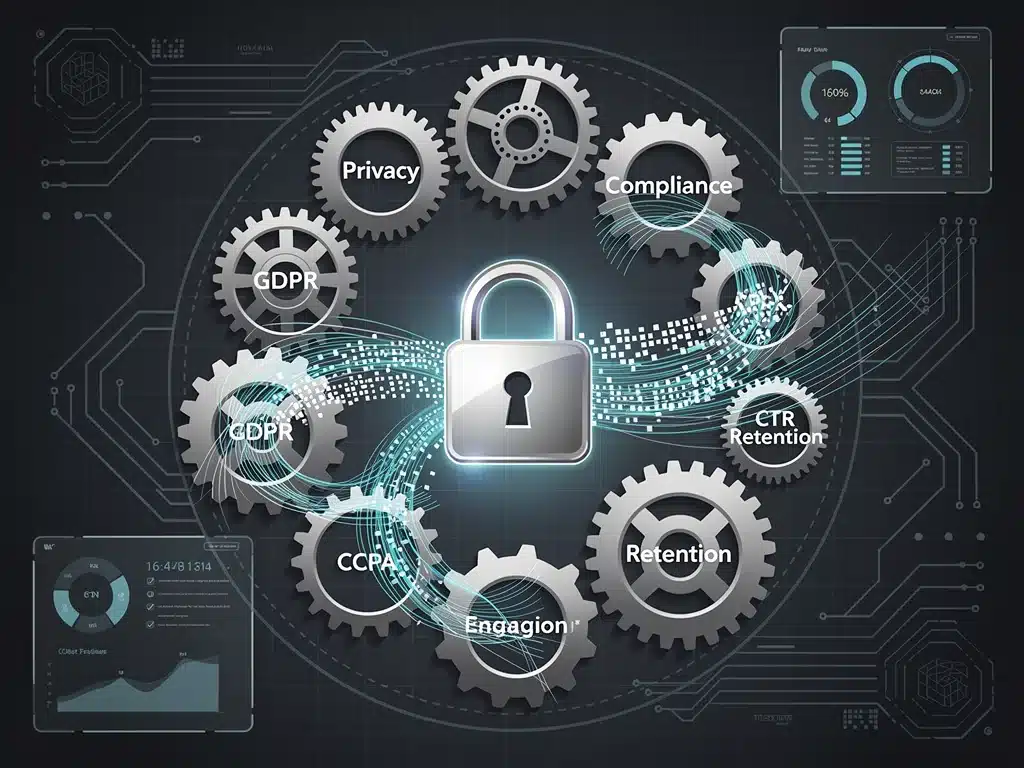
The evolving landscape of data privacy laws in 2026 is set to significantly impact audience engagement strategies, necessitating a shift towards transparency, consent-driven practices, and innovative data utilization to maintain consumer trust and deliver relevant experiences.
In an increasingly digital world, understanding how data privacy laws 2026 will affect audience engagement is no longer optional, it’s essential. As regulations tighten and consumer expectations shift, businesses must adapt their strategies to maintain trust and relevance. This article delves into the expert insights shaping this crucial evolution.
The Evolving Landscape of Data Privacy in 2026
The regulatory environment surrounding data privacy is in constant flux, and 2026 promises to bring even more refined and stringent laws. These changes are not merely bureaucratic hurdles but fundamental shifts in how personal data can be collected, processed, and utilized. Businesses operating within the United States, and those engaging with US audiences, must be acutely aware of these developments.
The foundational principles driving these laws remain centered on consumer rights: transparency, control, and accountability. As technology advances, so too does the sophistication of data collection, making robust legal frameworks imperative to protect individuals from misuse and exploitation. This continuous evolution means that yesterday’s compliance might not be sufficient for tomorrow’s legal landscape.
Key Legislative Trends and Their Implications
Several legislative trends are converging to reshape data privacy. While federal privacy legislation in the US is still a topic of ongoing debate, state-level initiatives continue to set precedents. Understanding these trends is crucial for proactive strategy development.
- Expansion of State-Level Laws: Beyond California’s CCPA and CPRA, more states are enacting their own comprehensive privacy laws, creating a complex patchwork of regulations that businesses must navigate.
- Increased Enforcement: Regulatory bodies are demonstrating a greater willingness to enforce existing laws, leading to significant fines and reputational damage for non-compliant organizations.
- Focus on Sensitive Data: There’s a growing emphasis on stricter controls around sensitive personal information, including health data, biometric data, and precise geolocation data.
- Cross-Border Data Flows: While primarily an international concern, the principles governing cross-border data transfers increasingly influence how US companies handle data from global audiences.
The implications of these trends are far-reaching, demanding a comprehensive approach to data governance and a re-evaluation of current audience engagement tactics. Simply put, ignoring these shifts is no longer an option for sustainable business growth.
Impact on Data Collection and Usage
The new data privacy laws in 2026 will fundamentally alter how organizations collect and use audience data. This isn’t just about obtaining consent; it’s about building a transparent and trustworthy relationship with consumers from the ground up. The days of opaque data practices are rapidly fading, replaced by a demand for clarity and control.
Companies will need to reassess every touchpoint where data is gathered, from website cookies and app permissions to customer surveys and loyalty programs. The focus will shift from simply collecting as much data as possible to collecting only what is necessary, with a clear purpose and explicit consent.
Rethinking Consent Mechanisms
Consent is the cornerstone of modern data privacy. However, the definition of “valid consent” is becoming more rigorous. Implied consent or vague opt-out options are increasingly insufficient. Explicit, informed, and granular consent will be the standard, requiring businesses to be more direct and transparent.
- Granular Consent: Users will expect to consent to specific types of data collection and usage, rather than a broad, all-encompassing agreement.
- Easy Withdrawal: The ability for users to easily withdraw consent at any time must be clearly communicated and frictionless.
- Clear Language: Privacy policies and consent requests must be written in plain, understandable language, avoiding legal jargon.
- Active Opt-in: Pre-ticked boxes or default settings that assume consent will be largely phased out in favor of active opt-in mechanisms.
This shift necessitates a re-engineering of user interfaces and data collection processes, ensuring that consent is not just a checkbox but a meaningful agreement between the user and the organization. The goal is to empower the user, not just inform them.
Personalization vs. Privacy: Finding the Balance
One of the most significant challenges posed by evolving data privacy laws is balancing the desire for highly personalized audience engagement with the imperative of protecting individual privacy. Consumers often appreciate tailored experiences, but they also demand control over their personal data. Striking this delicate balance will be a key differentiator for successful brands in 2026.
The traditional approach of extensive data profiling to deliver hyper-personalized content is under scrutiny. Instead, companies will need to explore privacy-enhancing technologies and consent-driven personalization methods that respect user choices while still delivering relevant and engaging experiences.
Strategies for Privacy-Preserving Personalization
Achieving personalization without compromising privacy requires innovative thinking and a commitment to ethical data practices. Several strategies can help organizations navigate this complex terrain successfully.
- First-Party Data Emphasis: Relying more heavily on data collected directly from customers with their explicit consent, rather than third-party data brokers.
- Contextual Personalization: Delivering relevant content based on immediate user behavior, site interactions, or stated preferences, rather than deep historical profiles.
- Anonymized and Aggregated Data: Utilizing data that has been anonymized or aggregated to identify trends and patterns without identifying individual users.
- Privacy-Enhancing Technologies (PETs): Exploring technologies like differential privacy, federated learning, and homomorphic encryption to gain insights from data while preserving individual privacy.
The future of personalization lies in building trust through transparency and empowering users with control over their data, proving that effective engagement doesn’t have to come at the expense of privacy.
Building Trust and Transparency with Audiences
In the wake of stricter data privacy laws, trust and transparency will become paramount for audience engagement. Consumers are increasingly wary of how their data is handled, and any perceived breach of trust can lead to significant disengagement. Businesses that prioritize clear communication and ethical data practices will be better positioned to foster strong, lasting relationships with their audiences.
This goes beyond mere compliance; it’s about cultivating a culture of data stewardship within the organization. Every interaction, every data point collected, and every communication should reinforce the brand’s commitment to respecting user privacy.
Key Pillars of Trust-Based Engagement
Building trust requires a proactive and consistent effort across all facets of audience interaction. It’s not a one-time fix but an ongoing commitment.
- Clear Communication: Articulate data practices in simple, accessible language, explaining what data is collected, why, and how it benefits the user.
- Empowering User Controls: Provide easy-to-use dashboards or preference centers where users can manage their data, consent, and communication preferences.
- Data Minimization: Adopt a “collect only what’s necessary” approach, reducing the risk associated with storing excessive personal data.
- Security Measures: Implement robust security protocols to protect collected data from breaches, demonstrating a serious commitment to safeguarding information.
Ultimately, transparency breeds trust, and trust is the foundation for meaningful and sustainable audience engagement in the privacy-conscious era of 2026.
Adapting Content and Communication Strategies
The shifts in data privacy laws will inevitably require changes in how content is created, distributed, and communicated to audiences. Generic, mass-market approaches will become less effective as personalization capabilities are refined and consent requirements become stricter. The focus will shift towards creating valuable content that organically attracts and engages audiences, rather than relying solely on retargeting or broad data segmentation.
Content strategies will need to be more contextually relevant and directly address user needs and preferences, often without the benefit of extensive historical data profiles. This encourages a return to foundational marketing principles: understanding your audience deeply and delivering genuine value.
Strategies for Privacy-Compliant Content Engagement
Effective content and communication in a privacy-first world demand creativity and a user-centric approach. Here are some strategies to consider for 2026 and beyond.
- Contextual Content Delivery: Tailoring content based on the user’s immediate context (e.g., location, time of day, current browsing session) rather than extensive personal history.
- Zero-Party Data Collection: Actively asking users about their preferences and interests through quizzes, surveys, and interactive content, allowing them to explicitly share what they want to see.
- Value-Driven Content: Creating high-quality, informative, or entertaining content that naturally attracts and retains an audience, reducing the reliance on invasive tracking.
- Subscription and Newsletter Focus: Building direct relationships through opt-in email newsletters and subscription models, where users explicitly consent to receive communications.
The emphasis will be on earning audience attention and engagement through superior content and respectful communication, rather than demanding it through pervasive tracking. This approach aligns well with the evolving expectations of privacy-aware consumers.
The Role of Technology and Innovation
Technology will play a pivotal role in helping organizations navigate the complexities of data privacy laws 2026 while maintaining effective audience engagement. From advanced consent management platforms to privacy-enhancing AI, innovation will be key to staying compliant and competitive. The challenge lies in adopting and integrating these technologies thoughtfully, ensuring they enhance rather than hinder user experience.
Investing in the right technological infrastructure and tools will be crucial for automating compliance processes, managing consent at scale, and implementing privacy-by-design principles across all digital operations. This isn’t just about avoiding fines; it’s about creating a more robust and future-proof data strategy.
Innovations Driving Privacy-First Engagement
A range of technological advancements is emerging to support privacy-compliant audience engagement. These tools are designed to facilitate transparency, automate consent, and protect data.
- Consent Management Platforms (CMPs): Centralized systems that help manage user consent preferences across various digital properties, ensuring compliance with diverse regulations.
- Privacy-Preserving Analytics: Tools that allow organizations to derive insights from data without compromising individual privacy, often through aggregation or anonymization techniques.
- Data Clean Rooms: Secure environments where multiple parties can collaborate on data analysis without sharing raw, identifiable data with each other.
- Decentralized Identity Solutions: Emerging technologies that give individuals more control over their digital identities and how their personal data is shared and verified.
Embracing these technological innovations will not only ensure compliance but also open new avenues for engaging audiences in ways that are both respectful of privacy and highly effective.
| Key Aspect | Impact on Engagement |
|---|---|
| Evolving Regulations | Requires continuous adaptation of data collection and usage policies. |
| Consent Mechanisms | Demands granular, explicit, and easily retractable user consent. |
| Personalization Balance | Shift to privacy-preserving methods like first-party and contextual data. |
| Trust and Transparency | Essential for fostering long-term audience relationships and brand loyalty. |
Frequently Asked Questions About Data Privacy Laws 2026
Small businesses will face increased compliance burdens, needing to implement clearer consent forms and data handling policies. While enforcement might initially target larger entities, adherence to privacy principles will be crucial for maintaining customer trust and avoiding potential future penalties.
Zero-party data is information customers intentionally and proactively share with a brand, such as preferences or purchase intentions. It’s vital because it’s given directly, building trust and allowing for highly relevant, consent-driven personalization without inferred data.
While major browsers are phasing out third-party cookies, and privacy laws accelerate this trend, it’s unlikely they will be completely obsolete for all uses. However, their role in tracking and advertising will be severely diminished, necessitating alternative identification and targeting methods.
Preparation involves comprehensive training on new compliance requirements, focusing on ethical data usage, and shifting strategies towards first-party and zero-party data. Marketers should prioritize transparent communication, value-driven content, and consent-based personalization to adapt effectively.
AI can help automate consent management, analyze anonymized data for insights, and power privacy-enhancing technologies. It can also assist in identifying and categorizing sensitive data, ensuring proper handling and compliance with evolving regulations, making it a crucial tool for future strategies.
Conclusion
The landscape of data privacy in 2026 is poised to fundamentally reshape audience engagement strategies. Businesses that embrace transparency, prioritize consumer trust, and innovate their data collection and usage practices will not only comply with evolving regulations but also forge stronger, more meaningful connections with their audiences. It’s a dynamic environment that demands continuous adaptation, a commitment to ethical data stewardship, and a clear understanding that privacy is no longer a trade-off but a foundational element of successful digital interaction. By focusing on these principles, organizations can transform regulatory challenges into opportunities for deeper, more respectful, and ultimately more effective audience engagement.
