Circular Fashion Economy: 2 Steps Brands Take by 2026
Advertisements
The circular fashion economy is rapidly gaining traction, with brands focusing on two key practical steps by 2026: enhanced material innovation and robust take-back and resale programs, aiming to reduce waste and promote resource efficiency.
The fashion industry, long criticized for its linear “take-make-dispose” model, is undergoing a profound transformation. By 2026, a significant shift towards a circular fashion economy is becoming increasingly evident, as brands are adopting concrete, practical steps to embed sustainability into their core operations. This evolution is not merely a trend but a fundamental re-evaluation of how clothing is designed, produced, consumed, and ultimately, repurposed.
understanding the circular fashion economy
The circular fashion economy represents a systemic approach to design out waste and pollution, keep products and materials in use, and regenerate natural systems. It’s a stark contrast to the traditional linear model, which relies heavily on virgin resources and generates enormous amounts of textile waste. This paradigm shift is driven by increasing consumer awareness, regulatory pressures, and the undeniable environmental impact of fast fashion.
At its heart, the circular economy in fashion aims to maximize the lifespan of garments and textiles. This involves everything from sourcing raw materials responsibly to designing for durability, repairability, and recyclability. The goal is to create a closed-loop system where materials are continuously cycled, minimizing the need for new resources and reducing landfill contributions.
the core principles of circularity
To truly understand the movement, it’s essential to grasp its foundational principles. These principles guide brands in their journey towards a more sustainable and responsible future.
- Design out waste and pollution: This means creating products that inherently minimize negative environmental impacts from the outset.
- Keep products and materials in use: Extending product life through repair, reuse, and resale is crucial.
- Regenerate natural systems: Moving beyond simple harm reduction to actively improve environmental health.
Embracing these principles requires a holistic change across the entire value chain, from material science to consumer engagement. The industry’s commitment to these ideals is what underpins the practical steps brands are now taking.
The transition to a circular fashion economy is not without its challenges, but the benefits – both environmental and economic – are substantial. Brands that successfully navigate this shift are poised to gain a competitive advantage, build stronger customer loyalty, and contribute meaningfully to a more sustainable planet. This foundational understanding sets the stage for exploring the specific actions being implemented.
step one: advanced material innovation and sourcing
One of the most impactful practical steps brands are taking by 2026 to foster a circular fashion economy is a concentrated effort on advanced material innovation and responsible sourcing. This involves moving away from conventional, resource-intensive materials and embracing alternatives that are renewable, recyclable, or derived from waste streams. The goal is to reduce the environmental footprint at the very beginning of a garment’s life cycle.
The focus isn’t just on what materials are used, but also on how they are produced. Brands are investing in research and development to create next-generation fibers and textiles that offer both performance and sustainability. This includes exploring bio-based materials, innovative recycling technologies, and processes that minimize water and chemical usage.
developing next-generation sustainable fibers
The textile industry is witnessing a boom in the development of new, eco-friendly materials. These innovations are crucial for creating garments that can be easily recycled or composted at the end of their life.
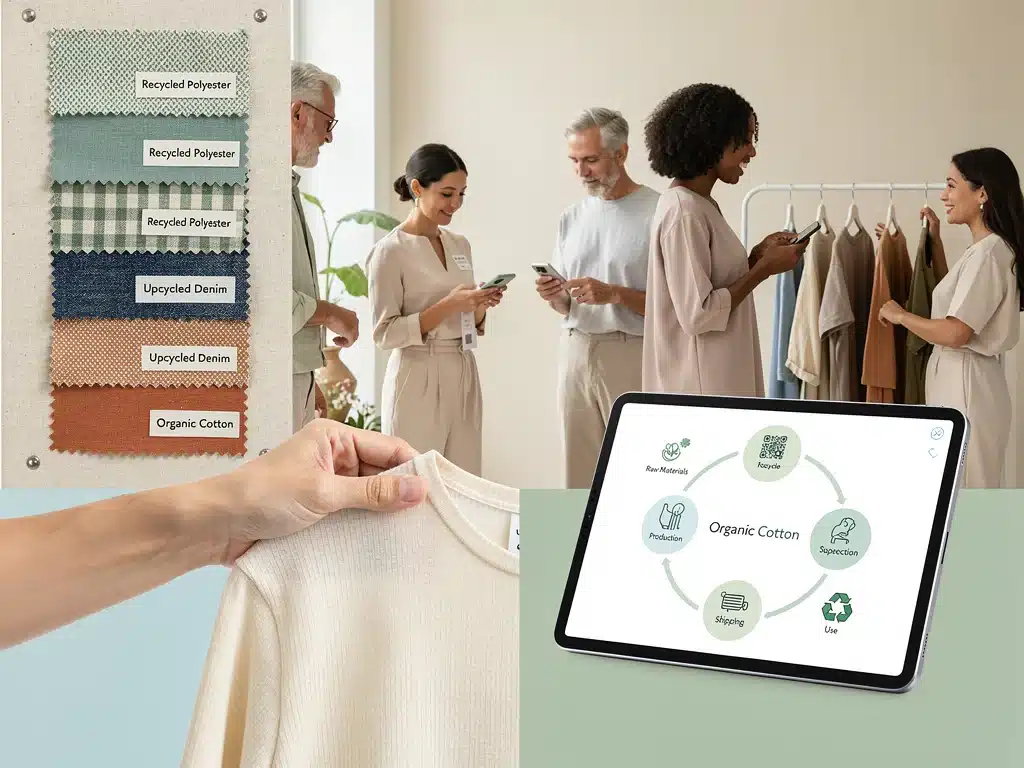
- Recycled materials: Utilizing recycled polyester from plastic bottles or recycled cotton from post-industrial waste.
- Bio-based alternatives: Exploring fibers made from agricultural waste, algae, or even mushrooms.
- Low-impact natural fibers: Sourcing organic cotton, linen, or hemp produced with minimal environmental impact.
These advancements are transforming the possibilities for sustainable design, allowing brands to create stylish and durable products without compromising on their environmental commitments. The investment in these materials signifies a long-term vision for circularity.
Beyond the fibers themselves, brands are also scrutinizing their dyeing and finishing processes. Innovations in waterless dyeing techniques and non-toxic chemical treatments are becoming standard practice, further reducing the environmental burden of textile production. This holistic approach to material innovation is a cornerstone of the evolving circular fashion landscape.
Ultimately, the push for advanced material innovation is about creating a foundation for truly circular products. By selecting materials that are designed for longevity and easy recycling, brands are laying the groundwork for a system where garments can endlessly regenerate, rather than end up in landfills. This commitment to sustainable inputs is a critical component of the broader circular strategy.
step two: robust take-back and resale programs
The second crucial practical step brands are implementing by 2026 for a thriving circular fashion economy involves establishing robust take-back and resale programs. This strategy directly addresses the end-of-life phase of garments, actively encouraging consumers to return worn-out or unwanted clothing for reuse, repair, or recycling, thereby extending product utility and minimizing waste.
These programs are designed to keep materials circulating within the economy for as long as possible. They acknowledge that even the most durable garments will eventually reach a point where they are no longer wanted or wearable in their current form. By providing clear pathways for return, brands take responsibility for the entire lifecycle of their products.
facilitating garment collection and recirculation
Effective take-back programs require convenient and accessible collection points for consumers. Brands are experimenting with various models to achieve this, making it easier for customers to participate in the circular journey.
- In-store collection bins: Providing designated areas in retail locations for customers to drop off old garments.
- Mail-back services: Offering prepaid shipping labels for customers to send items directly to sorting facilities.
- Partnerships with textile recyclers: Collaborating with specialized companies to efficiently process collected textiles.
These initiatives not only divert waste from landfills but also provide brands with valuable insights into material streams and consumer behavior, informing future design and production decisions. The logistical challenges are significant, but the long-term benefits for sustainability are undeniable.
The rise of brand-owned or partnered resale platforms is another key aspect of this step. By offering authenticated pre-owned items, brands can capture value from their products multiple times, appealing to a growing market of environmentally conscious and budget-savvy consumers. This also helps to combat the perception that sustainable fashion is inherently more expensive.
Implementing these take-back and resale programs demonstrates a tangible commitment to circularity, shifting the responsibility from individual consumers to brands. It fosters a new relationship with garments, viewing them as valuable resources rather than disposable items, and represents a significant move towards a more sustainable fashion ecosystem.
the role of digital traceability in circularity
Integral to both material innovation and take-back programs is the burgeoning role of digital traceability within the circular fashion economy. By 2026, brands are increasingly leveraging technology to track garments and materials throughout their entire lifecycle, providing transparency and enabling more efficient circular processes. This digital backbone is essential for verifying claims of sustainability and optimizing resource flow.
Traceability solutions, often utilizing blockchain or QR codes, allow consumers and brands alike to understand a product’s origin, composition, manufacturing journey, and even its potential for recycling or reuse. This level of transparency builds trust and empowers informed decision-making.
enhancing transparency with blockchain and qr codes
The application of advanced digital tools is revolutionizing how fashion supply chains operate, moving towards unparalleled levels of transparency.
- Blockchain for supply chain integrity: Recording every step of a garment’s journey, from fiber to finished product, on an immutable ledger.
- QR codes for product passports: Embedding scannable codes on labels that link to detailed information about the item’s materials, care instructions, and recycling options.
- RFID tags for inventory management: Tracking garments in real-time for efficient sorting and redistribution in take-back programs.
These technologies not only provide consumers with peace of mind but also help brands identify bottlenecks in their supply chains and optimize for circularity. Knowing exactly what materials are in a garment facilitates more effective recycling and ensures material purity.
Furthermore, digital traceability supports anti-counterfeiting efforts, adding another layer of value to brand-owned resale platforms. Consumers can verify the authenticity of pre-owned items, fostering greater confidence in the secondary market. This technological integration is a powerful enabler for scaling circular initiatives.
The ability to accurately trace materials and products is not just a nice-to-have; it’s becoming a fundamental requirement for brands committed to a circular future. It underpins the credibility of their sustainability claims and provides the data necessary to continuously improve circular practices, solidifying its place as a critical component by 2026.
consumer engagement: driving circular adoption
For the circular fashion economy to truly flourish, active consumer engagement is paramount. Brands understand by 2026 that their efforts in material innovation and take-back programs must be met with consumer participation. This involves educating consumers about the benefits of circular practices and making it easy and appealing for them to adopt more sustainable habits, from mindful purchasing to proper disposal.
Effective communication plays a vital role. Brands are investing in campaigns that highlight the environmental advantages of choosing recycled materials, extending garment life through repair, or participating in resale programs. The aim is to shift consumer mindsets from fast fashion consumption to a more conscious and appreciative approach to clothing.
educating for mindful consumption and participation
Cultivating a circular mindset among consumers requires clear messaging and accessible pathways for participation.
- Clear labeling and product information: Providing details on material composition, care instructions for longevity, and end-of-life options.
- Incentivizing participation: Offering discounts or loyalty points for returning old garments or purchasing pre-owned items.
- Storytelling about sustainability: Sharing the narrative behind sustainable materials and circular processes to build emotional connections.
These strategies help to demystify circularity and empower consumers to make choices that align with their values. When consumers understand the impact of their decisions, they are more likely to support brands that prioritize sustainability.
Beyond education, brands are also making it convenient for consumers to engage in circular practices. This includes simplifying the process for returning garments for recycling or resale, and providing accessible repair services. The easier it is for consumers to participate, the higher the adoption rate will be.
Ultimately, the success of the circular fashion economy hinges on a collaborative effort between brands and consumers. By actively engaging and empowering their customer base, brands are not only driving demand for sustainable products but also fostering a community committed to a more responsible and resource-efficient future for fashion.
challenges and opportunities for circular brands
While the momentum towards a circular fashion economy is strong, brands face significant challenges alongside numerous opportunities. By 2026, navigating these complexities will define the leaders in sustainable fashion. The shift requires substantial investment in new technologies, infrastructure, and business models, but it also opens doors to innovation, new revenue streams, and enhanced brand reputation.
One primary challenge lies in the scalability of circular solutions. Developing new materials and setting up comprehensive take-back systems are intricate processes that demand collaboration across the industry and robust logistical networks. The infrastructure for widespread textile recycling, for instance, is still developing in many regions.
overcoming hurdles and seizing new markets
The journey towards full circularity involves addressing several critical obstacles while simultaneously capitalizing on emerging prospects.
- Infrastructure development: Building the necessary facilities for sorting, recycling, and reprocessing textile waste on a large scale.
- Technological integration: Implementing advanced traceability systems and automated sorting technologies.
- Consumer behavior change: Shifting perceptions from ownership to access, and encouraging repair and reuse.
Despite these hurdles, the opportunities are vast. Brands that successfully innovate in circularity can tap into new market segments, attract environmentally conscious consumers, and differentiate themselves in a crowded marketplace. The resale market, in particular, represents a significant growth area, offering brands a chance to own the secondary market for their products.
Moreover, embracing circularity can lead to greater resource security and reduced reliance on volatile virgin material markets. By designing products that can be repeatedly recycled or reused, brands can mitigate supply chain risks and achieve greater operational resilience. This long-term strategic advantage positions circular brands for future success.
The challenges of transitioning to a circular fashion economy are real, but the strategic advantages and positive environmental impact far outweigh them. Brands that proactively address these hurdles and embrace the opportunities will not only thrive but also play a pivotal role in shaping a more sustainable future for the entire fashion industry.
| Key Aspect | Brief Description |
|---|---|
| Material Innovation | Focus on developing and using recycled, bio-based, and low-impact natural fibers to reduce environmental footprint. |
| Take-Back Programs | Establishing systems for consumers to return unwanted garments for reuse, repair, or recycling, extending product life. |
| Digital Traceability | Utilizing blockchain and QR codes to track materials and products, ensuring transparency and efficient circular processes. |
| Consumer Engagement | Educating and incentivizing consumers to adopt mindful consumption, participate in take-back, and embrace resale. |
frequently asked questions about circular fashion
▼
The primary goal is to shift from a linear “take-make-dispose” model to a system where resources are kept in use for as long as possible. This involves designing out waste and pollution, continuously cycling materials, and regenerating natural systems to minimize environmental impact.
▼
Material innovation contributes by developing sustainable alternatives like recycled, bio-based, and low-impact natural fibers. These materials reduce reliance on virgin resources, minimize environmental footprint during production, and enable easier recycling or composting at a product’s end-of-life.
▼
Take-back programs allow consumers to return used garments to brands for reuse, repair, or recycling. They are crucial for extending product lifespan, diverting textile waste from landfills, and providing brands with materials for their circular loops, fostering a more responsible consumption cycle.
▼
Digital traceability, through technologies like blockchain and QR codes, provides transparency on a product’s origin, materials, and lifecycle. This enables efficient sorting for recycling, verifies sustainability claims, builds consumer trust, and optimizes the overall flow of materials within the circular system.
▼
Consumers play a vital role through mindful consumption, actively participating in take-back programs, embracing repair, and supporting resale. Their engagement helps close the loop, reduces demand for new items, and drives brands to further invest in sustainable and circular practices.
conclusion
The journey towards a comprehensive circular fashion economy is undeniably complex, yet the practical steps brands are taking by 2026 demonstrate a resolute commitment to change. From pioneering advanced material innovations that redefine the very essence of textiles to establishing robust take-back and resale programs that transform consumption patterns, the industry is moving with purpose. These initiatives, bolstered by digital traceability and proactive consumer engagement, are not just incremental improvements but foundational shifts. While challenges remain, the collective efforts signify a powerful trajectory towards a fashion landscape that is regenerative, responsible, and truly sustainable for generations to come.
