AI in Fashion Forecasting: Predicting 2026 Trends with 90% Accuracy
Advertisements
Artificial intelligence is revolutionizing fashion forecasting, enabling precise predictions of 2026’s hottest trends with up to 90% accuracy by analyzing vast datasets and consumer behaviors.
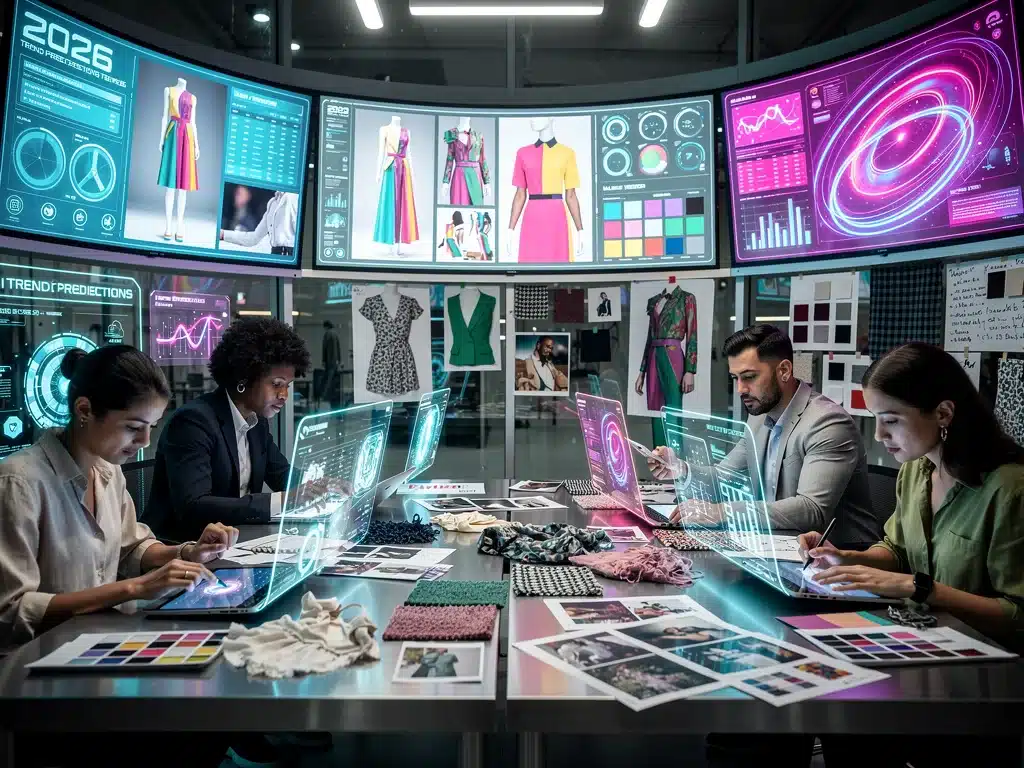
The fashion industry, once largely reliant on intuition and subjective interpretations, is undergoing a profound transformation. Today, AI fashion forecasting is emerging as a game-changer, promising to predict 2026’s hottest trends with an astonishing 90% accuracy. This shift isn’t just about technology; it’s about fundamentally altering how designers, retailers, and consumers interact with style, making the future of fashion more predictable and sustainable.
The evolution of fashion forecasting
Fashion forecasting has historically been a blend of art and science, relying on trend spotters, cultural analysts, and runway show observations. This traditional approach, while valuable, often involved significant lead times and a degree of uncertainty. The rise of digital data and advanced analytics has paved the way for a new era.
Before AI, trend prediction was a slower, more reactive process. Experts would attend fashion weeks, analyze socio-economic shifts, and observe street style to piece together emerging themes. This method was often prone to human bias and limited by the sheer volume of information available.
The digital age brought with it an explosion of data points. Social media, e-commerce platforms, and digital magazines became rich sources of information, but the human capacity to process such massive datasets remained a bottleneck. This is where AI steps in, offering the computational power to sift through and make sense of this digital deluge, transforming an art into a precise science.
From intuition to algorithms: a paradigm shift
The transition from intuition-based forecasting to algorithm-driven predictions marks a significant paradigm shift. AI models can identify subtle patterns and correlations that would be invisible to human observers, leading to more accurate and timely insights.
- Data sourcing: AI systems ingest data from diverse sources, including social media, sales figures, web searches, news articles, and even satellite imagery.
- Pattern recognition: Algorithms identify recurring themes, emerging aesthetics, and shifts in consumer sentiment across these vast datasets.
- Predictive modeling: Machine learning models are trained to predict the longevity and impact of identified trends, often months or even years in advance.
The ability of AI to process and interpret complex data at scale means that forecasting is no longer a retrospective exercise but a proactive one. This allows brands to anticipate consumer desires rather than merely responding to them, leading to more efficient production and reduced waste.
How AI achieves 90% accuracy in trend prediction
Achieving 90% accuracy in fashion trend prediction is not a simple feat; it’s the result of sophisticated AI models leveraging vast amounts of data and advanced analytical techniques. These systems go beyond surface-level observations to uncover deep-seated patterns and consumer desires.
At its core, AI’s predictive power stems from its capacity to analyze structured and unstructured data from countless sources simultaneously. This includes everything from real-time social media conversations to historical sales data, geopolitical events, and even weather patterns that might influence consumer preferences.
Leveraging big data and machine learning
The foundation of AI’s success in forecasting lies in its ability to harness big data and apply advanced machine learning algorithms. These algorithms learn from past trends and their outcomes, continually refining their predictive capabilities.
- Natural language processing (NLP): AI uses NLP to analyze text from fashion blogs, reviews, and social media, understanding sentiment and identifying emerging vocabulary related to style.
- Computer vision: Algorithms analyze images and videos from runways, street style, and e-commerce sites to identify visual characteristics of garments, colors, and silhouettes.
- Time-series analysis: Predictive models analyze historical sales data and trend lifecycles to forecast future demand and trend evolution.
By combining these techniques, AI can build a comprehensive picture of the fashion landscape, identifying micro-trends before they become mainstream and predicting their trajectory with remarkable precision. This multi-faceted approach is what drives the high accuracy rates we are now seeing.
The accuracy also comes from the iterative nature of machine learning. As more data becomes available and as actual trends unfold, the models are continuously retrained and optimized. This constant learning cycle allows AI systems to adapt to the ever-changing dynamics of the fashion world, making their predictions increasingly reliable over time.
Key technologies driving AI fashion forecasting
The accuracy and depth of AI fashion forecasting are powered by a suite of cutting-edge technologies. These tools work in concert to collect, process, and interpret the massive datasets needed to make informed predictions.
Understanding these technologies is crucial to appreciating the sophistication behind AI-driven trend analysis. It’s not just one algorithm but an ecosystem of interconnected systems that enable this predictive capability.
The technological backbone
A combination of advanced computing techniques forms the backbone of modern AI fashion forecasting, allowing for granular analysis and comprehensive insights.
- Deep learning networks: These neural networks are particularly adept at recognizing complex patterns in visual data, such as identifying specific garment features or color palettes.
- Predictive analytics platforms: Dedicated platforms integrate various data sources and AI models to provide consolidated trend reports and actionable insights for fashion businesses.
- Generative adversarial networks (GANs): While still emerging, GANs can generate new design concepts based on predicted trends, offering designers a tangible starting point.
These technologies allow AI systems to not only identify what’s trending but also to understand why it’s trending and how it might evolve. This goes beyond simple data aggregation, moving into true interpretive and generative capabilities that redefine the role of technology in creative industries.
The continuous development of these technologies ensures that AI’s ability to forecast fashion trends will only become more refined. As algorithms become smarter and data sources expand, the gap between prediction and reality will continue to narrow, offering an unprecedented level of certainty in a notoriously fickle industry.
Impact on design, production, and retail
The influence of AI fashion forecasting extends far beyond mere trend identification; it fundamentally reshapes every stage of the fashion value chain, from initial design concepts to final retail strategies. This integration leads to more efficient, sustainable, and consumer-centric operations.
For designers, AI acts as a powerful assistant, providing data-backed insights that can inform creative decisions. For manufacturers, it optimizes production schedules and reduces waste. In retail, it ensures that the right products are in the right place at the right time, minimizing markdowns and maximizing sales.
Reshaping the fashion ecosystem
The pervasive integration of AI is creating a more responsive and intelligent fashion ecosystem, where decisions are driven by data rather information.
- Design optimization: AI suggests design elements, color palettes, and fabric choices based on predicted trends and consumer preferences, streamlining the creative process.
- Supply chain efficiency: Accurate demand forecasting allows manufacturers to optimize inventory levels, reduce overproduction, and minimize waste, leading to a more sustainable supply chain.
- Personalized retail experiences: Retailers use AI-driven insights to curate personalized recommendations, optimize store layouts, and improve customer service, enhancing the shopping experience.
This holistic impact means that fashion brands can operate with greater agility and foresight. They can react quickly to micro-trends, avoid costly mistakes, and build stronger connections with their customer base by offering products that truly resonate with their desires. The days of mass-producing items that might not sell are becoming a relic of the past, replaced by a data-driven approach that prioritizes precision and relevance.
The ability to predict trends with such high accuracy also encourages innovation. Designers can experiment with new concepts, knowing they have a better understanding of what might appeal to consumers, fostering a more creative and dynamic industry.
Ethical considerations and challenges
While AI fashion forecasting offers immense benefits, its widespread adoption also brings forth a host of ethical considerations and challenges that the industry must address. These range from data privacy to the potential impact on creativity and workforce dynamics.
It’s crucial to acknowledge these aspects to ensure that the integration of AI is not only efficient but also responsible and equitable. Balancing technological advancement with human values is paramount for sustainable growth.
Navigating the complexities of AI in fashion
The path to fully integrating AI into fashion forecasting is not without its hurdles, requiring careful navigation of various ethical and practical complexities.
- Data privacy concerns: The reliance on vast consumer data raises questions about privacy and how personal information is collected, stored, and utilized by AI systems.
- Bias in algorithms: AI models can inadvertently perpetuate or amplify existing biases present in the training data, potentially leading to a lack of diversity in trend predictions.
- Impact on human creativity: There’s a debate about whether AI’s predictive capabilities might stifle human creativity, reducing the element of surprise and individual expression in design.
Addressing these challenges requires a concerted effort from technologists, designers, policymakers, and consumers. Transparency in AI processes, the development of ethical guidelines, and continuous auditing of algorithms are essential steps to mitigate potential negative impacts. The goal is not to replace human intuition but to augment it, creating a synergistic relationship between human creativity and AI’s analytical power.
Furthermore, ensuring that the workforce is adequately trained for new roles created by AI, and providing support for those whose jobs might be displaced, is a social responsibility that the fashion industry must embrace. The future of fashion, powered by AI, must be inclusive and fair.
The future of fashion: 2026 and beyond
Looking ahead to 2026 and beyond, the influence of AI on fashion forecasting is poised to become even more pervasive and sophisticated. We are on the cusp of a truly data-driven fashion era, where predictive analytics will not just inform but actively shape trends.
The accuracy rates are likely to increase even further, potentially reaching near-perfect predictions as AI models become more refined and data sources more diverse. This will lead to a more efficient, sustainable, and personalized fashion experience for everyone.
Anticipating hyper-personalized trends
The future will see AI moving beyond broad trend predictions to anticipate hyper-personalized styles, tailored to individual consumers and micro-communities.
- Predictive design: AI will not only identify trends but also generate design variations and entire collections based on forecasted consumer demand and aesthetic preferences.
- Sustainable production: Enhanced forecasting accuracy will drastically reduce overproduction and waste, making the fashion industry inherently more sustainable and environmentally responsible.
- Dynamic retail experiences: Stores will leverage real-time AI insights to constantly adapt their inventory, displays, and marketing to immediate trend shifts and local consumer behavior.
This evolution means that fashion will become more responsive to individual needs and desires, moving away from a one-size-fits-all approach. Consumers will experience fashion that feels uniquely theirs, while brands will operate with unprecedented precision, minimizing risk and maximizing relevance. The distinction between what’s trending globally and what’s personally preferred will blur, creating a fluid and highly individualized fashion landscape.
The integration of AI will also foster a more collaborative environment, where designers and AI systems work hand-in-hand. This partnership will push the boundaries of creativity, allowing for innovation that is both visionary and commercially viable, leading to an exciting and transformative period for the entire fashion industry.
| Key Aspect | Brief Description |
|---|---|
| Accuracy Boost | AI enables up to 90% accuracy in predicting future fashion trends by analyzing vast datasets. |
| Data Driven | Leverages big data, NLP, and computer vision from social media, sales, and cultural signals. |
| Industry Impact | Transforms design, optimizes production, and personalizes retail, enhancing efficiency and sustainability. |
| Future Outlook | Anticipates hyper-personalized trends, further sustainability, and dynamic retail experiences. |
Frequently asked questions about AI in fashion forecasting
AI achieves high accuracy by analyzing vast, diverse datasets from social media, sales figures, and cultural events using machine learning algorithms. These algorithms identify complex patterns and correlations invisible to human analysis, continuously learning and refining predictions over time.
AI utilizes a wide range of data, including social media posts, e-commerce sales data, web search queries, fashion blog content, runway show imagery, and even macroeconomic indicators. Natural Language Processing (NLP) and computer vision are key technologies for processing this diverse data.
It’s unlikely AI will fully replace human roles. Instead, it acts as a powerful tool, augmenting human creativity and intuition with data-driven insights. Designers and forecasters can leverage AI to make more informed decisions, freeing up time for innovation and strategic thinking.
For brands, AI fashion forecasting leads to optimized design processes, reduced overproduction and waste, improved supply chain efficiency, and highly personalized retail experiences. This results in increased profitability, better customer satisfaction, and enhanced sustainability efforts.
Ethical challenges include data privacy concerns due to extensive consumer data collection, the potential for algorithmic bias leading to a lack of diversity in trends, and debates around AI’s impact on human creativity. Responsible AI development and transparent practices are crucial for addressing these issues.
Conclusion
The integration of AI into fashion forecasting is not merely a technological advancement; it represents a fundamental shift in how the industry operates. With capabilities to predict 2026’s hottest trends with remarkable accuracy, AI is empowering brands to make smarter decisions, foster greater sustainability, and deliver hyper-personalized experiences to consumers. While challenges surrounding ethics and human agency remain, the future promises a fashion landscape that is more responsive, efficient, and creatively dynamic, driven by the synergistic power of human ingenuity and artificial intelligence.
